Showing posts with label LCD display module. Show all posts

Friday, 17 March 2017

What Optical LCD Display Module Modes Mean: Reflective, Transmissive and Transflective

Written by Peter Such, Business Development Manager (Germany) at New Vision Display, Inc.
“Reflective”, “transmissive” and “transflective” are terms often used in connection with liquid crystal display (LCD) technology. They describe the ways in which LCD display modules are illuminated. In contrast to the emissive display technologies, like OLED displays (organic light emitting diode) and VFDs (vacuum fluorescence displays), LCDs require a light source such as the sun, or artificial room light, or an integrated backlight, which is typically lit by LED (light emitting diode) semiconductors.
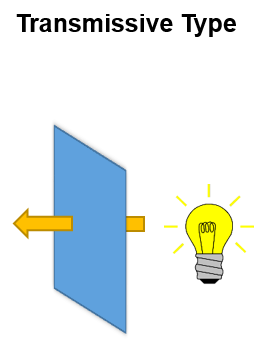

The mode of operation when light from a backlight passes through the LCD glass is called transmissive. The LCD glass or LCD panel functions as an “optical switch” where light from the backlight passes through the LCD cell depending on the orientation of liquid crystal molecules. The orientation can be “switched” on or off by an electrical field. Backlights produce a lot of light, making the display content very bright. The negative side to using backlights is that they require significant amount of energy within an LCD display module, especially because the backlight is required to be on all the time even if there’s no content showing on the display. In direct sunlight, a transmissive LCD screen can become ‘washed-out’ if the sunlight overpowers the luminance of the backlight. Strong enough backlights to maintain sufficient contrast in direct sunlight — such as in aviation displays — are not compatible with requirements of portable devices.

Thursday, 31 March 2016

Ways to Enhance the Functionality of LCD Displays

      Every day, we swipe, pinch or zoom; LCD displays are part of our daily lives. We’ve grown accustomed to using them on mobile devices like cell phones and tablets, when we withdraw money from ATM machines, as we’re loading addresses into navigation devices, and on the dashboard in our cars. Virtually every industry uses displays: Military, consumer, medical, automotive, industrial and marine. In order to perform such vastly different environments, displays require some sort of enhancement.

LCD Display
 
   An LCD enhancement can be anything from adding a simple resistive, capacitive touch panel to adding EMI/RFI conductive coatings. These enhancements are what enable the display to meet specific customer, industry, and environmental performance expectations. Let’s take a look at some of the many LCD enhancements.

  • Touch screen Integration: Adding a resistive or capacitive touch panel enables the display to be operated by touch.
  • Optical Films:Adding films such as anti-reflective(AR), anti-glare(AG),or heat-rejecting(IR) enhance a display’s visibility in bright or outdoor conditions.
  • Privacy Filters: A privacy filter prevents images on the display screen from being viewed from the side.
  • Vandal-Resistant Glass: This is commonly used on ATMs, parking meters, and digital signage.
  • EMI/RFIConductive Coatings: These protect the display from various types of atmospheric disturbance and are commonly used in medical applications.
  • LED Backlighting Enhancements: Existing LED backlights can be replaced with brighter and/or longer-lasting LEDs to improve performance.
  • Optical Bonding: By eliminating the air gap between the LCD and the other substrates, optical bonding enhances the display’s view-ability and ruggedness.
  • Heaters:Adding a heater to the LCD allows it to work in extreme cold temperatures.
  • Cover Lenses: Adding an additional layer of protective glass (i.e. Cover lens) reinforces the strength of the glass screen. Glass cover lenses can be made out of incredibly durable materials such as Corning® Gorilla® Glass.
      
 As you can see, many enhancements can be made to a LCD display so that it will meet the customer’s needs within their specific industry. No LCD can meet all the needs of every application. That’s why it’s important to know the requirements of your application and which types of displays and enhancements are available by your LCD Manufacturer during the design phase. With the right selection, your manufacturer can create the perfect LCD display module for your product.


Article Source: https://goo.gl/i8ZcGg